Check the health of a macOS device
You can view the security health of your device to identify if it's exposed to any security risks.
Okta Verify performs several security checks:
- OS version: Indicates if the operating system (OS) version of your device is up to date.
- Device password: Indicates if a password is set for your device.
- Biometric verification: Indicates if biometrics (for example, Touch ID) is enabled for your device.
- Disk encryption: Indicates if the hard disk of your device is encrypted.
A green check mark confirms that your device meets Okta device security recommendations. A yellow exclamation mark indicates that you should change some settings to better secure your device.
- Open Okta Verify.
- Click the Device health icon in the top-right corner.
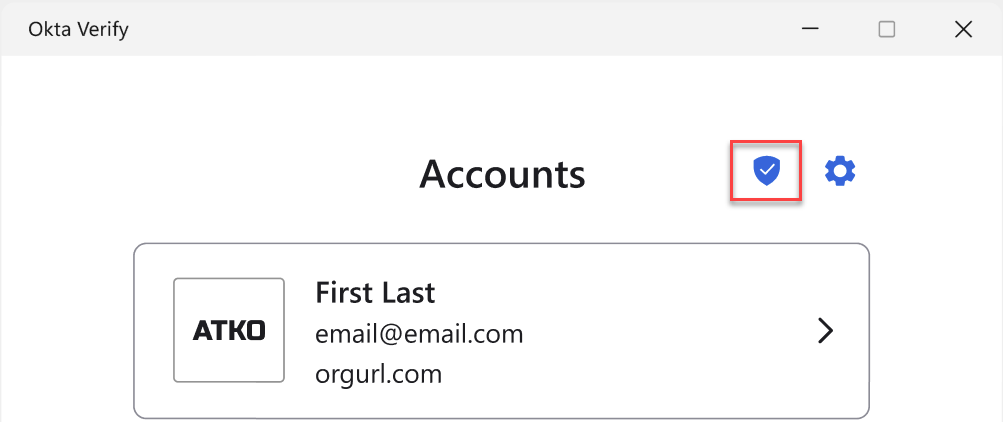
If you must take remediation actions, a badge appears on the Device health icon.
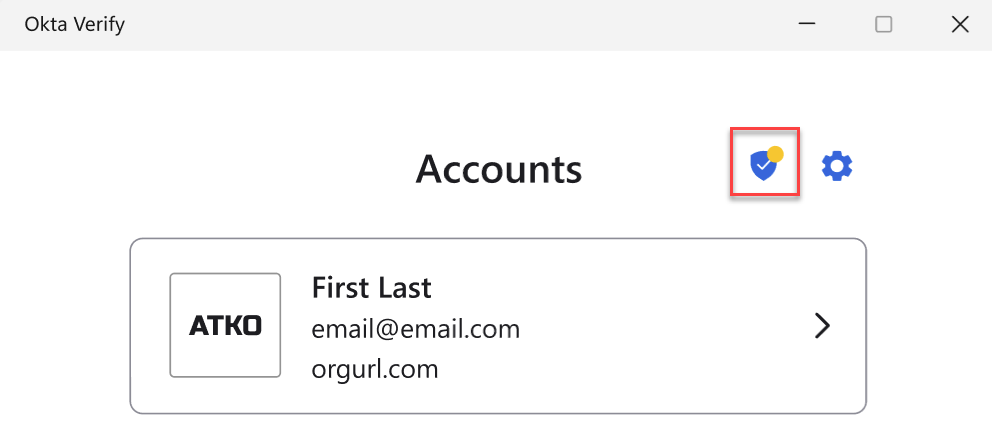
- View the health status of each security check for your device.
- If all checks passed, your device is secure.
- If you find warnings, follow the instructions in the table to fix the issues. For example, you might have to update the macOS version to include a security patch or enable biometrics on your device (such as face recognition or fingerprint verification).
To encrypt your disk, use FileVault. To learn how to turn on and set up FileVault, see Apple Support documentation. If you need help, contact your help desk.
Message Remediation Update to macOS version number
Update your operating system.
-
Make sure that your device is connected to a network and has enough battery life or is plugged in.
-
From the Apple menu, click .
-
If an update is available, click Upgrade Now.
Set a password for the lock screen
Enable a lock screen password for your macOS device.
-
From the Apple menu, click System Settings.
-
In the Settings app, click Lock Screen.
-
Click the Require password after screen saver begins or display is turned off dropdown menu and select a time interval from the list.
-
If you need to set or change your password, go to .
-
Select your user account, and then choose the option to change your password.
Turn on FileVault
Enable FileVault on your macOS device.
-
Follow the Apple documentation to turn on FileVault for your macOS version.
-
Click Turn On FileVault to encrypt the content of your computer to prevent unauthorized access.
-
Apple prompts you to create a recovery key. Follow the instructions to create and verify your recovery key.
-
Choose whether to store your recovery key with Apple or to keep it locally.
-
If you have multiple user accounts on your device, Apple prompts you to choose which accounts are allowed to unlock the disk.
-
Restart your Mac when prompted.
The encryption process begins after your computer restarts. This may take some time depending on the size of your disk and the speed of your computer. After the encryption process is complete, you can sign in as usual.
If you need more details, refer to the support documentation for your device: Apple Support.
-
Related links