SAML pass through reference architecture
This reference architecture describes the components, flow, and requirements to integrate SAML passthrough apps and Access Gateway.
Topics:
Architecture
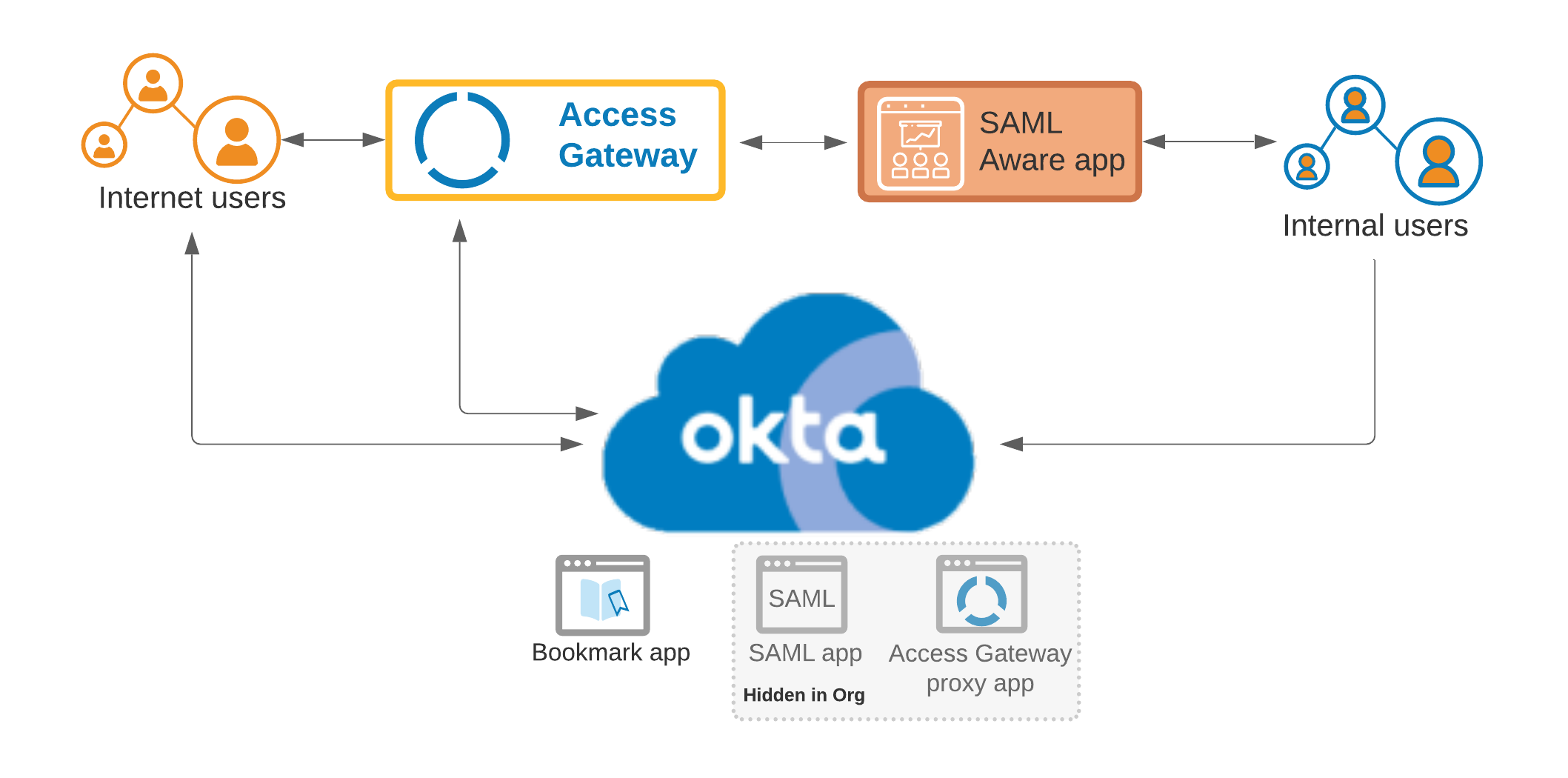
The SAML pass through architecture is composed of:
- Split DNS: Internal users access the SAML-aware app with the same DNS name as external users. However, the address provided is either the IP address of Access Gateway, for external users, or the IP address of the SAML-aware app, for internal users.
- Okta SAML app: An Okta-based app that's hidden from the user.
- Access Gateway and the Access Gateway app: Proxies SAML requests. The Access Gateway app is hidden from users.
- Okta bookmark app: Used to access the app by users in an Okta org.
Flow
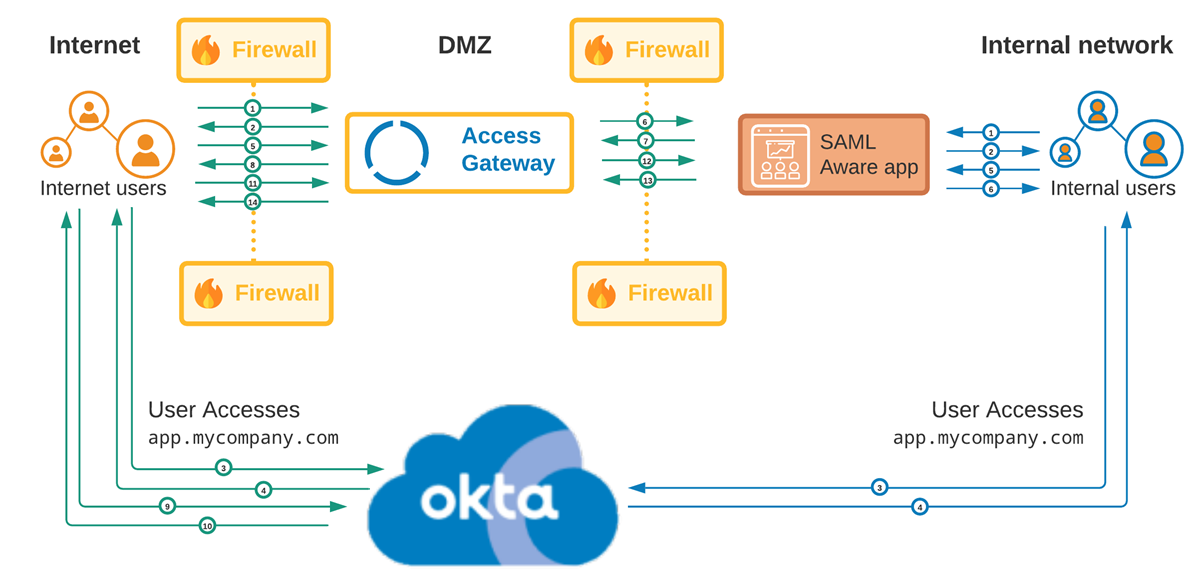
| External internet user | Internal user |
|---|---|
|
|
Components and requirements
| Component | Description and requirements |
|---|---|
| Okta Access Gateway | All versions of Okta Access Gateway support SAML pass through. |
|
Access Gateway app |
App that's defined within Access Gateway, but hidden from everyday users. |
| Okta SAML app | A hidden app that's used by Okta. |
| Okta Bookmark app | A bookmark app that's integrated in the Okta org. |
| SAML Application | An internal SAML app, which uses the same name as external references, differentiated by split DNS. |
| External URL | External URL specified by the Public Domain field in Access Gateway. It uses the same fully qualified domain name (FQDN) as the internal SAML app, but resolves to a different IP address depending on whether the request uses public or private DNS. For example: https://saml-app.example.com |